giovedì 12 settembre 2019


Ma perché li incontro tutti io quelli che “i cani sono migliori degli esseri umani”? 


Da un po’ di tempo, quando incappo nell’ennesimo genio che asserisce con tronfia sicumera di preferire i cani agli esseri umani,  rispondo che io preferisco i muschi e i licheni ai coleotteri, e nella maniera più assoluta. Soprattutto preferisco i licheni.
Qualche volta il sarcasmo non viene neanche colto. Ma del resto, perché dovrei stupirmene?

“Preferisco i cani agli esserei umani”, “I cani sono migliori degli esseri umani”.
Boh.
Ma davvero, come si fa a dire questa stronzata sentendosi pure ganzi come dei Jedi?
“Il cane ti è fedele per sempre, ti ama per sempre. Tu potresti anche trattarlo male ma lui ti rimane accanto. Lui vive per te, l’unica cosa che vuole è starti vicino. Lui capisce come stai”.
Tutto questo è vero e anche io amo i cani. Quando penso al mio Rusty, che ormai non c’è più, provo tanto bene e gratitudine: era un cagnolino un po’ tontarello ma incredibimente empatico e mi ha commosso tante volte. Ho un episodio in particolare che mi piace raccontare su di lui: mi ero fatta male alla coscia, avevo un livido enorme, ma era coperto dai pantaloni. Mentre stavo seduta, Rusty mi si è avvicinato e ha poggiato il sopra della sua capocetta proprio sul punto dove stava il livido, col muso rivolto verso il basso, rimanendo immobile in quella posizione a lungo, sicuramente abbastanza da farmi versare lacrime di puro amore. Voleva guarirmi, era chiaro.
Amo i cani. Mi piacciono anche quelli molto brutti e un po’ fetenti e sono certa che abbiano dei sentimenti e un corpo spirituale. Il rapporto uomo-cane può essere davvero speciale, lo so. Lo sappiamo.
Il fatto, (e non sapete quanto mi senta idiota a dover scrivere l’ovvio) è che le differenze tra un essere umano e un cane sono abissali, per citarne solo due: sono molto meno intelligenti di noi e non hanno il concetto del bene e del male.
Ne consegue che mettere a confronto cani e esseri umani non ha nessun senso, a meno che quell’amorevole e struggente descrizione di prima su come sia un cane non si riferisca a quello che, tutto sommato, si pensa di desiderare in un compagno di vita o in un amico.
In effetti un essere umano può non amarti per sempre, può non esserti sempre fedele, e, se lo tratti male, può facilmente mandarti a fare in culo. 
Perché l’amore abbia la possibilità di continuare, anche nell’amicizia, bisogna evolvere e non dare niente per scontato perché non è incondizionato come quello di una madre. 
O, appunto, come quello di una cane.
Facile farsi amare da un cane, comodo farsi amare da un cane. Anche il più stronzo degli stronzi non ha problemi a farsi amare da un cane.

La verità è che non lo vorreste un compagno/a che vive solo per voi e il cui unico desiderio è quello di starvi vicino. 
Non lo vorreste per davvero, credetemi.
Prima o poi sareste voi ad lo abbandonarlo, anche se magari non sull’autostrada.

”Meno male che ci sono i cani perché con le persone non so proprio come cazzo si fa!”. Ecco, questa secondo me sarebbe una frase più sincera, di maggiore consapevolezza.

Perché li incontro tutti io quelli che “i cani sono migliori degli esseri umani”? Chissà, forse per scrivere questo antipaticissimo post e perdere qualche inutile contatto.


mercoledì 14 novembre 2018

LA DIFFERENZA PRINCIPALE

Sono diventata mamma tardi, avevo 40 anni già da 9 giorni quando ho avuto Leandro, ed è anche per questo che mi sento in diritto di scrivere questo post: ho vissuto fino a 4 anni fa in un altro modo, con la testa di chi non ha figli e non
li desidera a tutti i costi, perché sta bene anche così. Non è mai stato il mio traguardo, il mio sogno segreto, men che mai una visione idilliaca nella quale grogiolarmi nei momenti no. Adesso che lui c’è, però, mi chiedo come avrei fatto ad acquisire la forza, la consapevolezza su me stessa e sull’amore che ho adesso. Quindi posso dire che faccio anche parte di quelle donne che proprio non sapevano quanto un figlio l’avrebbe fatta crescere e guarire (anche ammalare, ma questa è un’altra storia).
Una volta scrissi in un post che la vita può essere meravigliosa in tanti i modi, poco ma sicuro anche senza figli. Che una donna che ha figli non diventa necessariamente migliore di una che non li ha avuti. Che questa storia della donna incompleta è un’emerita stronzata.  Continuo a pensare fermamente tutto questo (del resto, ne ho continue riprove nella mia vita di tutti i giorni) ma, badate bene, non sto certo dicendo che essere madre o non esserlo sia la stessa cosa: non lo è, e non è una questione di quanto una donna sia generosa e servizievole con chi ama, quanta cura, sforzi e anche consapevoli sacrifici faccia per sua madre, sua nonna, suo zio… Non è la stessa cosa di prendersi cura di un figlio. C’è il fatto che ti senti addosso la responsabilità immane, totale di un altro essere umano (ed è tutta tua, non puoi smollarla a nessuno) e poi che l’hai avuto nella pancia per 9 mesi, ma non è tutto qui. 
Ci ho messo un po’ a capire cosa fosse. Ecco, penso che la differenza principale che si crea tra una donna che ha avuto un figlio e una donna che non l’ha avuto sia un sentimento del tutto inedito, che trasforma in maniera profondissima e indelebile la percezione del mondo e delle persone. Questo sentimento, il più struggente che si possa provare, deriva dalla consapevolezza che tuo figlio potrebbe morire prima di te. 
È una cosa gigantesca e non possiedo le parole e la capacità per sviscerarla qua, nero su bianco.  Non si tratta di vivere costantemente e ansiosamente nell’incubo di una sua morte improvvisa, non è questo. Direi che è come se una specie di dio di una nuova realtà entrasse dentro di te, per sempre, e ti rendesse istantaneamente una persona più forte, più debole, più compassionevole, più vendicativa, più coraggiosa, più impaurita… Ecco, più di così non riesco ad essere efficace, meglio di così, per ora, non riesco a spiegare.
Posso solo aggiungere che questa nuova me mi ha fatto capire davvero perché si dice che se fosse per le madri non ci sarebbero guerre, ma anche perché si paragona una madre ad una leonessa.

Con profondo affetto e ammirazione per tutte le mie care amiche, madri e non.

giovedì 19 settembre 2013

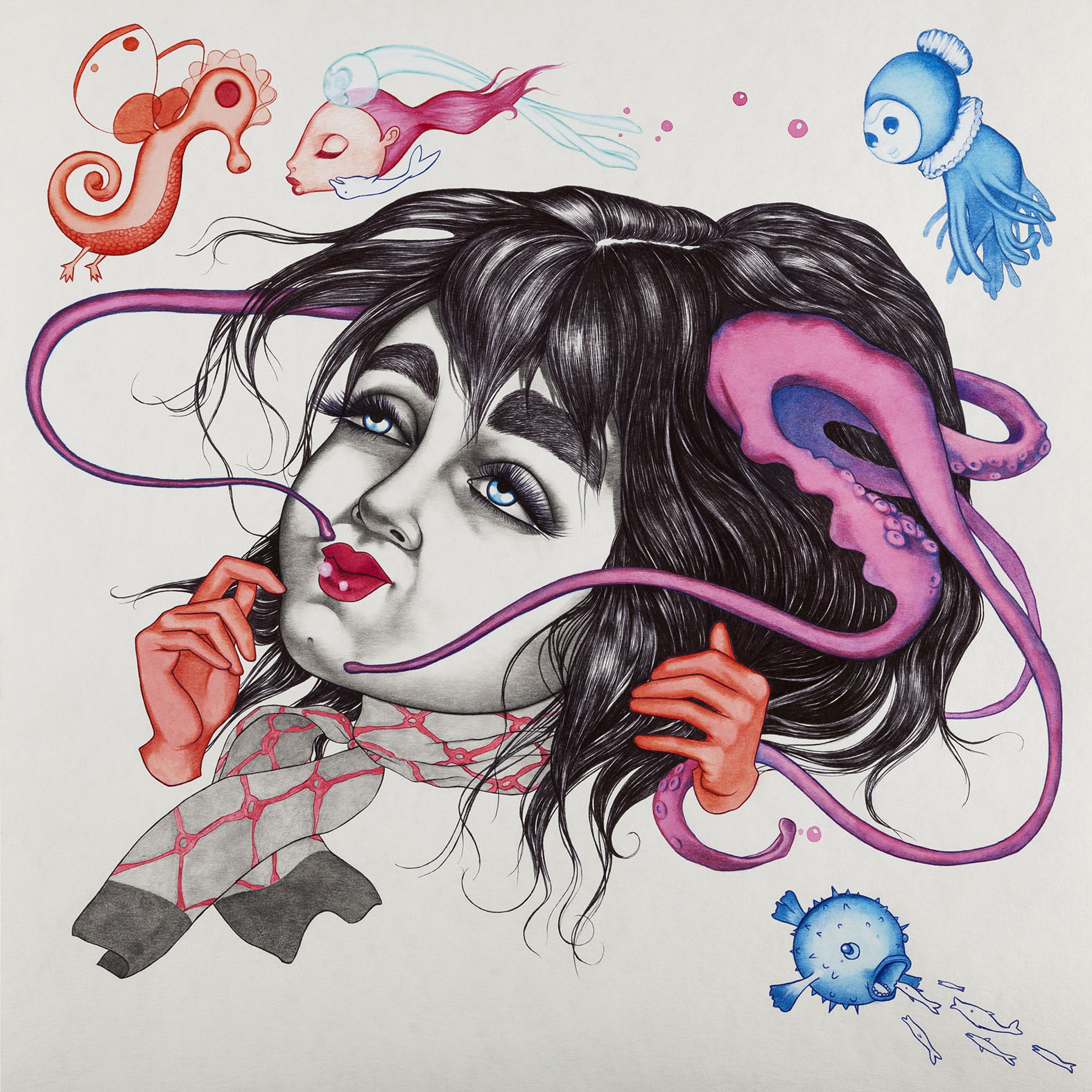
DON'T KISS ME!


A bad girl who doesn't want to know what love is.

(Mixed media on linen paper, 50x63 cm)


lunedì 8 luglio 2013

martedì 4 giugno 2013

DILKA


Portrait of Dilka Nassyrova, artist from Kazakistan, by Valentina Campagni
(mixed media on paper)

EMMA VILD


Portrait of Emma Vild, photographer from Sweden, by Valentina Campagni
(mixed media on paper)

"CORRA"


                       Portratit of Corrado Zeni, painter from Italy, by Valentina Campagni
                       (mixed media on paper)

MACIJEI


                     Portrait of Macijei Biberstein, painter from Poland, by Valentina Campagni

FAKE GOLD


                                "Fake Gold" by Valentina Campagni - mixed media on paper

mercoledì 30 gennaio 2013

INSIDE OPERAPERTA


The first "experiment" of OPERAPERTA, as you know, was a remake of "Lady with an Ermine" by Leonardo Da Vinci. I was given the head.

After three rough quick sketches, performed without thinking (I was curious to see what an instinctive approach could suggest to me ) I put spontaneity aside and I tried to be well-informed about this lady. I am interested in people and their stories, after all, so why not to go to discover precisely that of the Lady?
I read that there are three theories about who the woman painted by the master might be, but the most widly accepted is that she is Cecilia Gallerani. Cecilia, which, even she was sixteen, becomes lover of Ludovico il Moro. Cecilia, who gives him a son. Cecilia, who is moved away from the Sforza court when the wife of him, Beatrice D'Este, decides that she has endured the presence of that "puta" (meaning "little girl", eh, I recommend!) too long.
The thing I found most fascinating, however, was the discovery that I was going to draw a intelligent and highly educated girl. She was able to create around herself a background frequented by the greatest personalities of the time, including Leonardo Da Vinci: Bergamino's residence, Cecilia's last home, in fact, became a meeting point for poets, writers, philosophers, scholars and intellectuals.
At that point I took no time to understand how I would draw her. I mixed her features and the face expression to that of a '20s mocking and independent looking woman and I put the brain out, for the obvious reason linked to her love for the culture and thought.
I put a worm in its folds, however, a metaphor of pain, such as a thought that occasionally moves, causing pain. The jellyfish, like other anthropomorphic figures, is almost a constant of my work. I use it as one of the representations of fears, anxieties and dangers and in this case I used it to express our fragility, because a gelatinous and soft materia is not able to protect something that is precious and delicate as brain.
The only thing created without thinking about it, and it emerged in the paper as a natural consequence, was the "cerebellum chignon", pierced by pins, like a ball of wool.


But how did my adventurers fellow live this experience? How did they approach the subject, especially their own "piece"?
I have asked them.

"Why have you represented your piece in this way?"

Vacon Sartirani, author of '"ermine", replied: "Certain types of amorphous growths have become an inseparable part of my graphic thoughts. In representing the ermine, I wanted to get as far as possible from the image of the animal, with all things that it brings behind, both anatomically and symbolically. I wanted to keep, instead, some of the other elements, such as the deadly and icy aura, that I transferred into the skull. "


It's true, we can find these growths in the beautiful artworks of Vacon. I went on his page to learn more and I read about larvae, corals, ghosts, apparitions, foreign cocoons ... and blue and red colours. Two contrasting elements that are familiar to me, and also essential in my works until 2011. The interesting article by Gaia Locatelli confirms to me that I have more in common with this artist than I thought. I looked at his paintings on the web-site carefully and I strongly suspect that they can be dimensional doorways, but I have to see them to be sure about it ... and I'm sorry to remember to have lost this opportunity at AvantGarden gallery, in Milan.

Alessandro Sicioldr, who drew the body of the lady, is a meticulous drawing artist, interested in unconscious and in the relationship between alchemy and psychology. His influences are clear and important. He says of his work: "I don't usually represent something in a cerebrally way...I transcribe the visions that I have on paper, as a result of specific suggestions. In this case I saw the body of the lady- an artwork widely inflated and statically imprinted in the collective imagination- as part of a cycle of decomposition-putrefaction-creation, a break that brings a new birth; pieces of meat comes off and meanwhile create the breeding ground for germination halfway between the plants and the animals. "


I love the word "vision." And also "germination". But most of all, I love Sicioldr' drawings, and I'm very curious about its future developments. He's also very young. Lucky him.

Dario Molinaro brings me fun. There is something about him that reminds me Fethry Duck. Fethry Duck on a hammock, smoking a "joint" and drawing clouds with his finger.
Dario is a storyteller, like me, and I recognize some of the common influences. That of Andrea Pazienza is even more present in him, but it is only in th expressive power, because his individuality is strong, it doesn't carry annoying traces.
To my question, he answers: "Hello, we could say that a real "because" doesn't exist. The original work has not a background, there is a black-black-dark, so I just tried to get something from the black, perhaps the undergrowth that I represented was the obvious choice. Before we get to this end, however, I did various tests that did not convince me at all. Probably the ermine, that lives in the woods expecially, gave me the okay. "


I'm sure, Dario. It was the ermine, I know it.
The forest created by Dario is one in which I would adventure inside. I've missed myself, watching it, more than once, entering voluntarily in the most dense and maybe I will do it again, though, I have to admit, I have had a bit of fear.

And now the time has come to meet the art director, Francesco D'Isa, the creator of Operaperta. Francesco is a digital artist, able to mix delicacy and hardness in a manner and style that I find very appealing. I like his alien-women, of which he lets you to see, in trasparency,impossible anatomy, full of meanings and symbols. But I think his masterpiece is "Europe", the realization of which took months and for which he had another idea: Sliced Art...
But that's another story and you have to look for it on your own , because if I start to open parenthesis on Francesco, it will be almost certain that this article will never end!
I asked him what was the most exciting part of this first adventure of the project.

Francesco D'Isa: "To see your parts get to me, I was waiting for them as for a Christmas gifts," he says, "But even assemble the result was beautiful, this is a stage where I increase interventions as art director, because I had a great desire to draw something on the work, and I guess also others could have, as well as me!"

I think so too. The temptation to intervene on the work must be strong, for someone who is also an visual artist, like him.
But who can do the art director?

Francesco D'Isa: "Anyone. But to do the art director, as well as to be an artist, you must be good. With a bad art director or bad artists, you generate ugly "opereaperte". For this reason, as far as I can, I try to put together good artists in a project, and when someone wants to be an art director, I wish he was good.
But anyone can use the method operaperta. There is no copyright. The only rule is that in the "original team" we want those we like in.
And if one wants to do it on his own, do so. About definition of "good", I give up "

Right. This is operaperta. Anyone can have an idea and involve who wants to be involved.
I know that the creation of a website is boiling in the pot, this will provide further details. Meanwhile there is another project that is starting and perhaps others are emerging silently in the other minds, maybe on the other side of the world.


What do you think of the final result of this first operaperta?”

Francesco D'Isa: "I think what makes a project a satisfaction: that is better than I thought it would be. It seems to me a good work, beyond that method, and this is important. It is more homogeneous than I expected, and in my opinion the styles don't clash at all with each other."

Vacon Sartirani: "We have started a project that has very big potential, waiting for being explored. The collective work is one of the cornerstones of contemporary art - I also think to street art, a field that is growing up and has always been strongly characterized by a collectivization of the creative process, even for purely technical necessities - but in my opinion, this potential has not been sufficiently analyzed by visual arts yet. "

Alessandro Sicioldr: "I'm thrilled. The collective work is different from my personal research style , but I think it always opens new doors. The collision of different ideas and visions can change perspective in a interesting way, and this work is its obvious example. Even the different graphic techniques, blended together, created a "Lady-Frankenstein" with its own vitality, its style and its coherence. "

Dario Molinaro: "You know, I had not in mind (in my imagination) the final result of this work ... we all are very different, it was difficult to find a balance in the composition, but I must say that the result is there and you can see. there should be more collective works like this (although I am a solitaire). Why not? Draw together, make dirty papers, have fun and love each other. "


You already know my opinion. I can only add that we are a bit all solitaire creators in this group, as far as I could see, and that probably we enjoy too much the pleasure of being with ourselves while creating. It's also true that Operaperta does not take away this pleasure, but in some way,it is able to "unite souls" or something, to bring them together, giving them a sort of child to be loved.
It's an experience to be done. And to be done again and we evetually will see what it becomes.

"Love each other" says Dario. Mmh... That's great! At least let's try.


lunedì 28 gennaio 2013

DENTRO L'OPERAPERTA

Il primo “esperimento” di OPERAPERTA, come già sapete, è stata una rivisitazione della “Dama con l'ermellino” di Leonardo Da Vinci e a me è stata assegnata la testa.
Dopo aver accartocciato tre schizzi veloci, eseguiti senza pensare, per vedere cosa mi suggeriva un approccio istintivo, ho rinunciato alla spontaneità e sono andata a informarmi meglio su questa signora. Alla fine a me interessano le persone e le loro storie, quindi perché non andare a riscoprire proprio quella della dama?
Ho letto che ci sono tre teorie su chi possa essere la donna dipinta dal maestro, ma la più accreditata è che si tratti di Cecilia Gallerani. Cecilia, che neanche sedicenne diventa amante di Lodovico il Moro. Cecilia, che gli da un figlio. Cecilia, che viene allontanata dalla corte degli Sforza quando la moglie di lui, Beatrice D'Este, decide di aver sopportato abbastanza la presenza di quella “puta” (nel senso di “bambina”, eh, mi raccomando!).
La cosa che ho ritenuto più affascinante, però, è stato scoprire che stavo per disegnare una ragazza intelligente, estremamente colta, capace di creare attorno a sé un ambiente frequentato dalle più grandi personalità dell'epoca, tra cui anche Leonardo Da Vinci: la residenza del Bergamino, ultima dimora di Cecilia, divenne infatti luogo di incontro per poeti, scrittori, filosofi, studiosi e intellettuali.
Per me, a quel punto, è stato un attimo capire come l'avrei disegnata. Ho mischiato i suoi tratti e l'espressione del suo viso a quelli di una donna degli anni '20, dall'aria beffarda e indipendente, e le ho messo il cervello in evidenza, per ovvi motivi legati al suo amore per la cultura e il pensiero.
Con un tarlo tra le sue pieghe, però, metafora di una sofferenza, di un pensiero che ogni tanto si muove in lei, facendole male. La medusa, come altre figure antropomorfe, è una quasi costante dei miei lavori. La uso come una delle rappresentazioni delle paure, delle ansie e dei pericoli e in questo caso per esprimere la nostra fragilità, perché un materiale gelatinoso e morbido, non è certo in grado di proteggere una cosa preziosa e delicata come un cervello.
L'unico elemento creato senza ragionarci sopra, ma emerso nel foglio come naturale conseguenza, è stato il “cervelletto chignon”, trafitto da spilli, come un gomitolo di lana.


Ma come hanno vissuto i miei compagni d'avventura questa esperienza? Come hanno approcciato il soggetto e soprattutto il loro “pezzo”?
Gliel'ho chiesto.

Perché hai rappresentato la tua parte in questo modo?”

Vacon Sartirani, autore dell' “ermellino”, risponde: “Certi tipi di escrescenze amorfe sono ormai parte inscindibile del mio modo di pensare graficamente. Nel rappresentare l'ermellino, ho voluto allontanarmi il più possibile da ciò che l'immagine dell'animale, anche in senso anatomico e simbolico, si porta dietro. Ho voluto mantenere invece alcuni altri elementi, come l'aura mortifera e algida, che ho trasferito nel teschio.


E' vero, nei bei lavori di Vacon troviamo queste escrescenze. Vado sulla sua pagina per capire meglio e leggo di larve, coralli, fantasmi, apparizioni, corpi bozzoli... e di colore blu e di colore rosso. Due elementi contrapposti a me familiari, fondamentali anche nei miei lavori fino al 2011. L'interessante articolo di Gaia Locatelli mi conferma che questo artista e io abbiamo più in comune di quanto pensassi. Guardo con attenzione i suoi quadri sul sito e sospetto fortemente che siano porte dimensionali, ma per accertarmene dovrò vederli dal vivo e mi dispiace ricordarmi di aver perso l'occasione di farlo all'AvantGarden gallery, a Milano.

Alessandro Sicioldr, che ha disegnato il corpo della dama, è un meticoloso disegnatore, interessato all'inconscio e alla relazione tra alchimia e psicologia. Le sue influenze sono chiare e importanti. Dice del suo lavoro: “Di solito non rappresento qualcosa cerebralmente, ma trascrivo su carta le visioni che ho a seguito di particolari suggestioni. In questo caso il corpo della Dama, opera largamente inflazionata e impressa staticamente nell'immaginario collettivo, è stato visto da me come parte di un ciclo di decomposizione-putrefazione-creazione , una rottura portatrice di nuova nascita, brani di carni che si distaccano e che al tempo stesso creano l'humus per una germinazione al confine tra il vegetale e l'animale.


Adoro la parola “visione”. E anche “germinazione”. Ma soprattutto i disegni di Sicioldr, e sono molto curiosa circa le sue future evoluzioni. E' pure molto giovane. Beato lui.

Dario Molinaro mi mette allegria. C'è qualcosa in lui che mi ricorda Paperoga. Paperoga su un'amaca che si fuma un cannone e disegna nuvole col dito.
Anche Dario è un narratore, uno storyteller, come me, e riconosco alcune delle influenze comuni. In lui quella di Andrea Pazienza è ancora più presente, ma si avverte solo nella potenza espressiva, perché la sua individualità è forte, non si porta dietro nessun fastidioso strascico.
Alla mia domanda, risponde così: “Ciao, diciamo che un perché vero e proprio non esiste. L'opera originale non ha uno sfondo, c'è un nero-nero-buio; quindi ho semplicemente cercato di ricavare un qualcosa da quel nero, forse il sottobosco che ho rappresentato era la scelta più ovvia. Prima di arrivare a questo finale, però, ho fatto varie prove che non mi convincevano affatto. Probabilmente l'ermellino, che vive specialmente nei boschi, mi ha dato l'ok.


Ne sono sicura, Dario. E' stato l'ermellino, io lo so.
Il bosco creato da Dario è uno di quelli nei quali io mi avventurerei. Mi sono persa a guardarlo più di una volta, entrando volontariamente nella parte più fitta e forse lo farò ancora, anche se, lo ammetto, un filo di paura ce l'ho avuta.


Adesso però è arrivato il momento di passare all'art director, Francesco d'Isa, ideatore di operaperta. Francesco è un artista digitale, che mischia delicatezze e durezze in un modo e con uno stile che trovo molto accattivante. Mi piacciono le sue donne-aliene, di cui lui lascia vedere, in trasparenza, un'anatomia impossibile, ricca di significati e simboli. Credo comunque che il suo capolavoro sia “Europa”, per la cui realizzazione ha impiegato mesi e per il quale si è fatto venire un'altra idea: Sliced Art...
Ma questa è un'altra storia e ve la dovrete cercare da soli, perché se comincio ad aprire parentesi su Francesco, è quasi certo che questo articolo non avrà mai fine!
Gli ho chiesto quale sia stata la parte più esaltante di questa prima avventura del progetto.

Vedere i vostri pezzi che arrivavano via via, li aspettavo come regali di natale” risponde lui, “Ma anche montare il risultato è stato bello; questa è una fase in cui aumenterò gli interventi dell'art director, perché mi veniva una gran voglia di disegnarci qualcosa, e penso che così come a me venga anche ad altri!

Lo penso anche io. La tentazione di intervenire sull'opera deve essere forte, per qualcuno che, come lui, è anche un'artista visivo.
Ma chi è che può fare l'art director?

Francesco D'Isa: “Chiunque. Ma per fare l'art director, così come per fare l'artista, bisogna essere bravi. Con un cattivo art director e/o cattivi artisti, si generano opereaperte brutte. Per questo, per quel che posso, cerco di tirare dentro artisti bravi e quando qualcuno vuol fare l'art director, vorrei che fosse bravo.
Ma chiunque può usare il metodo operaperta. Non c'è copyright. Come sola regola direi che nel gruppo "originale" si tira dentro chi ci piace.
Se poi uno lo vuol fare per conto suo, ben venga. Sulla definizione di "bravo" poi, mi tiro indietro.

Giusto. Questa è operaperta. Chiunque può avere un'idea e coinvolgere chi vuole.
So che in pentola sta bollendo pure la creazione di un sito, che offrirà ulteriori delucidazioni. Intanto c'è un altro lavoro che sta partendo e forse altri, silenziosamente, si stanno stagliando nelle altrui menti, magari dall'altra parte del mondo.

Cosa pensi del risultato finale di questa prima operaperta?”

Francesco D'Isa: “Penso quello che rende un progetto una soddisfazione: che è meglio di come pensavo sarebbe venuto. Mi sembra un bel lavoro, a priori del metodo, e questo è l'importante. È omogeneo più del previsto, e a mio parere gli stili non cozzano affatto l'uno con l'altro.

Vacon Sartirani: “Abbiamo dato il giusto avvio ad un progetto che ha potenzialità molto ampie e che aspettano di essere sperimentate. Il lavoro collettivo è uno dei punti cardine dell'arte contemporanea – penso anche alla street art, campo in continua ascesa e da sempre fortemente caratterizzato da una forte collettivizzazione del processo creativo, anche per motivi di necessità puramente tecniche – che però al di fuori, appunto, dell'arte murale secondo me non è stato ancora sufficientemente analizzato da parte dell'arte visiva.”

Alessandro Sicioldr: “Ne sono entusiasta. I lavori collettivi, per quanto differenti dallo stile della mia ricerca personale, aprono sempre nuove porte. La collisione tra varie idee e visioni permette cambi di prospettiva interessanti, e questa opera ne è il palese esempio. Anche le differenti tecniche grafiche, fuse tra loro hanno creato una Dama "Frankestein" con una sua propria vitalità, un suo stile e una sua coerenza.”

Dario Molinaro: “Sai, non avevo in mente (nella mia immaginazione) il risultato finale di questa opera...siamo tutti molto diversi, era difficile trovare un equilibrio compositivo, ma devo dire che il risultato c'è e si vede. dovrebbero esserci più lavori collettivi come questo (anche se sono un disegnatore solitario). massì, disegniamo tutti assieme, sporchiamo fogli, divertiamoci e amiamoci.”

La mia opinione la conoscete già. Posso solo aggiungere che in questo gruppo siamo un po' tutti dei solitari, per quel che ho potuto capire, e che probabilmente, stragodiamo del piacere dello stare con noi stessi mentre si crea. E' anche vero che Operaperta non toglie questo piacere, ma in qualche modo può riuscire ad “unire anime” o chissà, a “riunirle”, donando loro una sorta di figlio al quale non possono che voler bene.
E' un'esperienza da fare. E da rifare, e stare a vedere cosa diventa nel tempo.


Amiamoci”, dice Dario... ma sì! Che bello!
Almeno proviamoci.


lunedì 14 gennaio 2013

OPERAPERTA


Operaperta è un progetto ideato da una persona che ammiro (e non ne ammiro molte così spontaneamente) e che riesce a coinvolgermi ogni volta che “bussa alla mia porta”: Francesco D'Isa. Per chi non lo conoscesse, consiglio vivamente di scoprirlo sul web, intanto posso dirvi che è un artista, un narratore e una persona che ha idee brillanti e le concretizza, senza perdersi. Operaperta ne è un esempio.

Con una sintesi quasi pubblicitaria, e non suoni offensivo, il progetto, nella sua pagina facebook, si presenta con queste parole:

In breve: 1) Un art director ha un'idea. 2) Alcuni artisti ne disegnano una parte. 3) Ognuna di queste parti viene assemblata insieme. 4) Un'operaperta è nata.”

Per il primo esperimento, una rivisitazione de “La dama con l'ermellino”, sono stati chiamati Alessandro Sicioldr, Dario Molinaro, Vacon Sartirani e la sottoscritta. A mio parere, tutti artisti con mani diverse ma con assonanze che un'anima sensibile non può non cogliere e Francesco, art director della ciurma, anima sensibile è.
(Oh, magari è uno stronzo, ma questa è l'idea che mi sono fatta finora. Risata di sottofondo).

Per facilitare il lavoro di tutte le persone coinvolte, D'Isa ha esposto poche, semplici regole: utilizzo del bianco e nero e disegnare solo il pezzo richiesto, senza sfondo. Per il resto, massima libertà. Ha anche assegnato a ognuno il suo: Alessandro ha avuto il corpo, io la testa, Vacon l'ermellino e Dario ha disegnato lo sfondo.
I “pezzi” sono a mano a mano arrivati e Francesco li ha assemblati digitalmente.

Il risultato, a mio parere, è stupendo. Lo so, sono di parte, è vero, devo lasciare a voi il giudizio, ma sono sinceramente soddisfatta di questa dama del 2000 e ogni tanto devo guardarmela, perché ha un'energia pazzesca, l'energia di cinque artisti, di cinque persone, tutti per una sola opera.
Più ci penso e più ne sono affascinata.
Non posso dire che durante i lavori, io abbia potuto approfondire il rapporto con gli altri. Direi quasi niente. Forse è l'effetto collaterale del lusso di poter lavorare a distanza, o forse no, fatto sta che ognuno ha fatto il suo e ci siamo consultati sul risultato finale. Punto. Non è qualcosa che ho avvertito come una strana mancanza ma certamente “non lo stavo facendo” con anime che sapevo affini per esperienza personale.
Ed è proprio per questo che sono affascinata dal risultato: come se avessimo comunicato, pur nell'ego dell'esecuzione del proprio pezzo, su un piano invisibile, molto più profondo.
La dama vibra. Illumina. Esiste.
Ogni suo elemento è potente e prezioso, ha la stessa valenza, è amalgamato, eppure tutto è leggibile, armonioso, anche laddove non mi è sembrato immediatamente.

Sono sicura che creare collettivamente sia uno dei modi più contemporanei, attuali di fare arte.

Scriverò ancora di questo, per il momento vi lascio con il link dalla pagina di Operaperta e con la speranza che molti artisti vogliano fare questa esperienza.


http://www.facebook.com/o.aperta


Operaperta is a project created by a person that I admire (and I don't admire many people, so spontaneously) and that is able to involve me every time he "knocks at my door": Francesco D'Isa. For those who doesn't know him, I highly recommend to look for his work on the web; in the meanwhile I can tell you that he is an artist, a storyteller and a person who has brilliant ideas and realizes them, without getting lost.
Operaperta is an example.

With an advertising summary - I hope it don't sound offensive - the project in its Facebook page, shows itself in these words:

"In short: 1) An art director has an idea. 2) Many artists draw a part of it. 3) Every part is rendered together. 4) An Operaperta is born.

For the first experiment, a remake of "Lady with an ermine", were called Alessandro Sicioldr , Dario Molinaro, Vacon Sartirani and myself. In my opinion, different hands but with similarities that a sensitive soul must grasp and Francesco, art director of the crew, is a sensitive soul.
(Oh, maybe he's an asshole, but this is the idea that I have done so far. Laughter in the background).

To facilitate the work of all those involved, D'Isa has exposed a few simple rules: use of black and white and draw only the required piece, without background. For the rest, maximum freedom. He also assigned to each one his own: Alexander got the body, I got the head, the ermine was for Vacon and Dario draw the background.
Once the "pieces" arrived, Francesco assembled them digitally.
The result, in my opinion, is gorgeous. I know, I'm biased, it is true! I leave you the judgment, but I am truly satisfied with this Lady of 2000 and I often need to look her, because it has an amazing energy, the energy of five artists, five people, all for a single work.
The more I think, the more I am fascinated. I can not say that during the work, I was able to deepen the relationship with the others. I would say almost nothing. Maybe it's the side effect of the luxury of being able to work at a distance, or maybe not, the fact is that everyone has done his and we consulted on the final result. Stop. It's not something that I felt as a strange lack, but for sure "I was not doing it" with souls that I know as cognate, from personal experience.
And it is why I am fascinated by the result, as if we had communicated, despite the ego of the implementation of its piece, on an invisible plane, much deeper.
The lady vibrates. Lights up. Exists.
Every element is powerful and valuable, has the same value, but everything is amalgamated, readable, harmonious, even what initially didn't seem so.


I'm sure that collectively create, is one of the most contemporary, current way to make art.


I'll write more about this, for now I leave you with the link from the page Operaperta and with the hope that many artists want to have this experience.


mercoledì 24 ottobre 2012

CI SONO MOLTE MASCHERE... e a me interessano tutte!


Io racconto storie e le storie che racconto hanno come protagonisti gli esseri umani. Non le lumache, non le nuvole, non la luce delle stelle, ma le persone. Quelle difettose, manchevoli, a volte disperate, perché le storie interessanti non parlano mai di una bontà già acquisita, di una pace vittoriosa dall'inizio alla fine: sarebbero noiose e soprattutto inutili.
Quindi, capite che non posso permettermi di detestare davvero un altro essere umano, anche se ne avessi le ragioni più evidenti, perché quello che detesto, è proprio ciò che mi serve per creare e godere dell'arte: non posso combattere per eliminarlo, né semplicemente negarlo. Il processo a me utile (anche se molto faticoso) è quello dell'accoglienza, dell'osservazione, della comprensione e della rielaborazione. Non butto via niente, tanto meno quel turbine che si crea quando qualcuno mi fa del male, direttamente o indirettamente, vagamente o violentemente. Il mio punto di osservazione, a seconda di come mi sento, può abbassarsi od elevarsi: di fermo rimangono le mie “scelte morali”, la mia idea di cosa sia giusto o sbagliato. E posso arrivare alla condanna teorica ma mai all'esecuzione pubblica, perché è terribile dire di qualcuno: “Non cambierà mai! Non lo capirà mai!”.
Questo mi consente di avvicinarmi a certe maschere, provando repulsione e gratitudine allo stesso tempo.
Ci sono tante maschere e, mentre alcune si possono intuire subito, altre sono complesse e richiederebbero una conoscenza prolungata. Alcune sono più leggere e divertenti, di quelle che usiamo un po' tutti quando è il caso, altre invece sono incollate con pericolosa potenza al volto, forse fino a fondersi con esso, e diventa molto difficile capire chi si ha di fronte, esattamente come è difficile per quel soggetto sentire profondamente chi è.
Osservare vuol dire conoscere, e voler conoscere è una forma d'amore. Dico questo perché sono convinta che tutte le sofferenze umane derivino alla fine dalle stesse cose: non percepire il valore della propria vita e di quella altrui, la paura della morte, l'attaccamento a desideri basati sull'illusione... Ma il fatto scatenante che ha portato ognuno a manifestare questa sofferenza è diverso per tutti, così come lo è anche il modo di manifestarla: ed ecco che nascono le storie. Questa consapevolezza mi porta ad un "sufficiente" livello di compassione e mi aiuta in quel lavoro di accoglienza e osservazione di cui parlavo all'inizio. Nonostante l'inevitabile pungersi che reca l'avventurarsi, mio malgrado, in questi gineprai umani, quello che mi può tornare indietro vale molto di più della fatica della lotta, dalla quale, in fondo, nessuno può davvero esimersi, se non isolandosi dal mondo. Il premio più ambito è il capire qualcosa di me stessa attraverso gli altri e questo accade sempre, fosse anche “solo” nell'essere riuscita ad allargare la mia capacità d'amare o, almeno, a non diminuirla.
Falsi, ipocriti, mascheroni, bugiardi, gelosi, malinconici, cattivi, perfidi, egoisti, vanitosi, pessimisti, tristi, depressi, malelingue, aggressivi, ignoranti, egocentrici, invadenti, inetti, invidiosi (scorderò certamente qualcuno!) ...Grazie! Senza di voi non ci sarebbero storie appassionati: senza di voi avremmo un mondo noioso.


P.S.
Questo, però, non significa certo che aiuterò la tua mano a “piantarmi un coltello nel petto”!

P.P.S.
Io non rispetto quello che sei, ma quello che potresti diventare se tu lo volessi!


THERE ARE MANY MASKS...

...and I am interested in all of them!


I tell stories and the stories I tell have characters like human beings. Not snails, not clouds, not light of the stars, but people. Those defective, deficient, sometimes desperate, because interesting stories never speak about already acquired goodness, a victorious peace from beginning to end: would be boring and mostly useless.
So, you know I can't afford to hate deeply another human being, even if I had the most obvious reasons, because what I hate, is exactly what I need to create and enjoy the art: so I can't fight to eliminate it, nor simply deny it. The process useful to me (though very hard) is welcome, observation, understanding and reworking. I do not throw anything away, let alone the whirlwind that is created when someone hurts me, directly or indirectly, vaguely or violently. My point of view may rise or fall, depending on how I feel: just my "moral choices" are firm and outlined. My idea of ​​what is right or wrong. And I can get to the theoretical condemnation but never public execution, because it's terrible think about someone: "He/She will never change! He/She will never understand!"
This allows me to get close to certain masks, feeling revulsion and gratitude at the same time.
There are so many masks, and while some can be understood immediately, others are complex and require a knowledge prolonged. Some masks are lighter and fun, the kind that all us use when we need it; others are glued powerfully and dangerously on the face, almost to merge with it, and it becomes very difficult to understand who is in front of us, just as it is difficult for that person deeply feel himself.
Observe means to know and wanting to know is a form of love. I say this because I am convinced that all human suffering arise from the same causes: not perceive the value of their own lives and the lives of others, the fear of death, attachment to desires based on the illusion ... But the trigger event that led people to express this pain is different for everyone, as it's different, also, the way to express it, and it is here that the stories born.This awareness leads me to a sufficient level of compassion that helps me in this work to welcome and observation mentioned at the beginning. Although the crossing of these human junipers bears inevitable stings, what I can return back is incommensuralmente more than the effort of our struggle, from which, after all, no one can really dispense with, if not in isolation from the world. The ultimate prize, for me, is to understand something about myself through others and this always happens, even just to be able to expand my ability to love, or, at least, not decrease it.
False, hypocritical, masks, liars, jealous, sad, bad, evil, selfish, conceited, pessimistic, sad, depressed, gossip, aggressive, ignorant, self-centered, overbearing, jealous (Surely I'm forgetting someone!) ... Thank you! Without you there would be no fascinanting stories: without you, we would have a boring world.


P.S.
However, this doesn't mean that I will support your hand to "put a knife on my chest!"

P.P.S.
I don't respect what you are, but what you could be if you wanted it!


martedì 10 luglio 2012

A little sea


Ho già scritto altrove che questa serie di disegni apparentemente "facili", nascondono in realtà l'enorme desiderio di esorcizzare la paura della sofferenza amorosa. I personaggi sono tutti discutibili: nessuno di loro è perdonabile, non tanto per il male che si fanno reciprocamente ma per quello che fanno a se stessi. Il dolore in amore è sempre pungente, melmoso, scottante, anche quando si tratta soltanto di una forte infatuazione, condita di solito da grande attrazione fisica. Anzi, questo tipo di esperienze ti possono lasciare ancora più svuotato perché non hai fatto a tempo ad elaborare, non hai capito cosa c'era che non andava bene. Il dolore amoroso, secondo soltanto a quello della morte (altrui!) è la cartina tornasole per comprendere chi siamo davvero, in quel momento. È una situazione non desiderabile che però mette nella più rara condizione di potersi guardarsi dentro. 


I have written, elsewhere, that this series of drawings apparently "easy", actually hide the enormous desire to exorcise the fear of suffering love. The characters are all questionable: no one is forgivable, not so much for the evil they do to each other but what they do to themselves. The pain in love is always sharp, muddy, burning, even when it's simply a strong infatuation, usually accompanied by great physical attraction. Rather, this type of experience can leave you even more empty because you have not had time to prepare, you do not understand what was going bad. The pain of love, second only to that of death (of the others!) is the litmus test for understanding who we really are, at that time. The situation is not desirable, however, puts the rarer condition of being able to look inside yourself. 


sabato 30 giugno 2012

Stop at the surface (of themselves)


Quando mi imbatto in lavori che immediatamente mi fanno pensare ad altri, provo una specie di vergogna per chi li ha creati. Quando per un artista (o presunto tale) l'influenza di un autore è troppo forte, sento un fastidio particolare, e provo a ragionare, per l'ennesima volta, su cosa sia per me arte. Che tutti siamo influenzati da qualcosa è normale, è la vita, non può essere altrimenti, anzi, anche questo è il bello. Ma arrivare a pensare che, dal momento che un certo autore tocca tutte le corde della nostra anima, noi possiamo avere il diritto di venirne così tanto "ispirati", è un altro paio di maniche! Capita di osservare dei lavori che "potevamo fare noi" o che "avremmo voluto fare noi" ma non è andata così. Il vero artista beve e mangia tutto quello che l'ha colpito, ferito, reso felice o infelice nella sua vita, e dopo aver mescolato tutto questo gran casino con la propria unicità, lo riversa all'esterno, concretizzandolo in qualcosa che può avere solo il suo nome. Forse, la persona che anela a fare arte, invece di accontentarsi di fare qualcosa che già esiste, dovrebbe immergersi in se stesso come non ha mai fatto, per aprire le porte rimaste chiuse da sempre, spogliandosi davvero, mostrandosi per quello che è veramente, sperimentando e rischiando. Il risultato potrebbe non piacere immediatamente a tutti, ma anche questo, a mio vedere, è il bello.


When I come across works that immediately make me think about others, I feel a kind of shame on those who created them. When for an artist (or presumed) the influence of an author is too strong, I feel a particular nuisance, and I try to reason, for the umpteenth time, what is art for me.. That we are all influenced by something is normal, it's life, can't be otherwise, indeed, this is beautiful. But thinking that, since a certain author touches all the strings of our soul, we can have the right to become so "inspired"by him, it's another kettle of fish! Happen to see a work that "we could do" or that "we would want to make" but it didn't happen. The true artist, drinks and eats everything that has struck and wounded him, made him ​​happy or unhappy in his life, and after mixing all this mess with its uniqueness, he pours it outside, making something which can only have his name. Perhaps, people who yearn to make art, instead of being content to do something that already exists, should immerse in himself as he never did, opening the doors remained closed, really showing for what he is, experimenting and taking risks. The result might not appeal to everyone immediately, but even this, in my view, is the beauty.